How to reassemble and oil a mechanical watch movement: the 6497 step by step
Reassembly is where a service succeeds or fails. A watchmaker shows the order to rebuild a 6497, how to seat the bridges, and which oil goes where.
Taking a movement apart is the easy half. Putting it back together, with every pivot in its jewel and every drop of oil in the right place, is where a service succeeds or fails. Here is how I reassemble and oil an ETA/Unitas 6497, in the order I follow at the bench and in my online course.
Why is reassembly harder than disassembly?
Because the bridges have to come down onto several pivots at once. When you take a bridge off, the wheels simply stay in the plate. When you put it back, each pivot must find its jewel before you tighten a single screw; force it and you bend a pivot. The bigger the bridge and the more pivots it holds, the harder it gets — which is why the German three-quarter plate, one bridge from the barrel to the escape wheel, earns a watchmaker's respect.
In what order do you put the gear train back?
- Start with clean, dry parts back in their labelled tray, and turn the trays over to check that no small part is stuck in a corner.
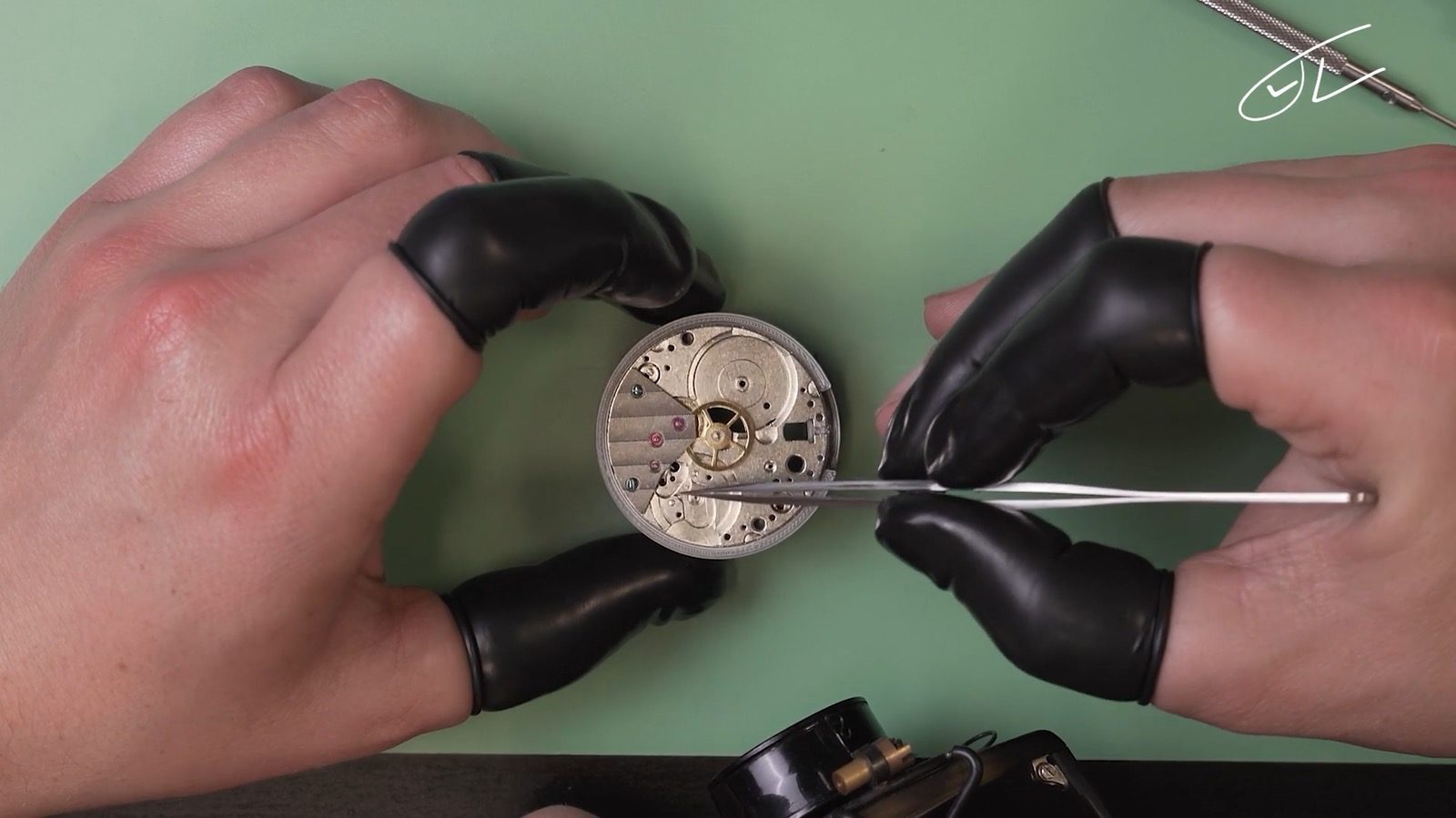
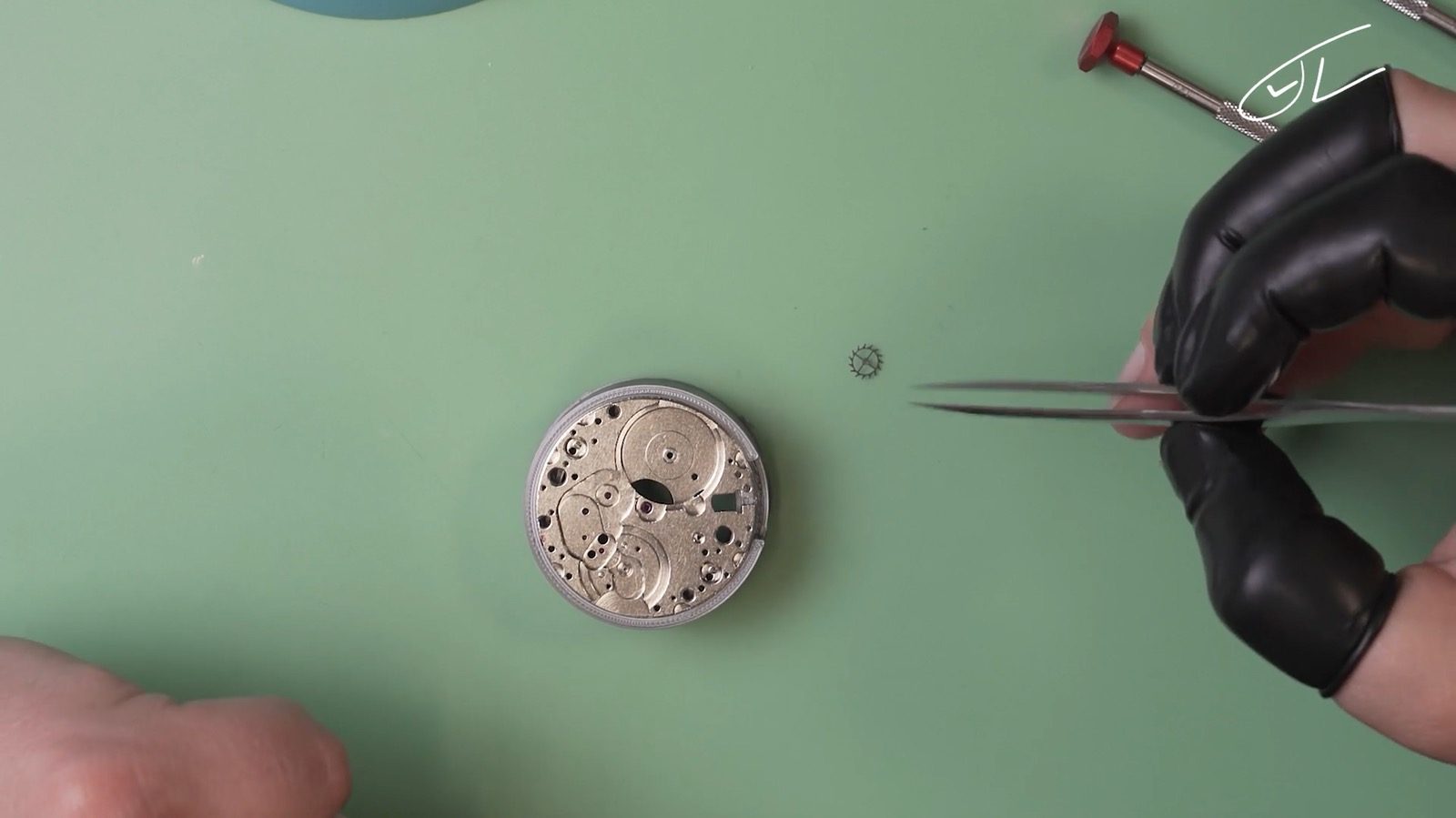
- Put the plate bridge-side up and lay in the escape wheel, then the third wheel, then the fourth wheel, whose long pivot goes through the plate to carry the seconds hand.
- Put the centre wheel in now: it is held by the barrel bridge, and you could not get it in later.
- Lower the train bridge onto its guiding feet, then get down level with the movement and guide the pivots one by one into their jewels.
- Snug the screws lightly, let the bridge settle, and only then tighten. A puff from the air blower should spin the whole train freely.
How do you lubricate the barrel?
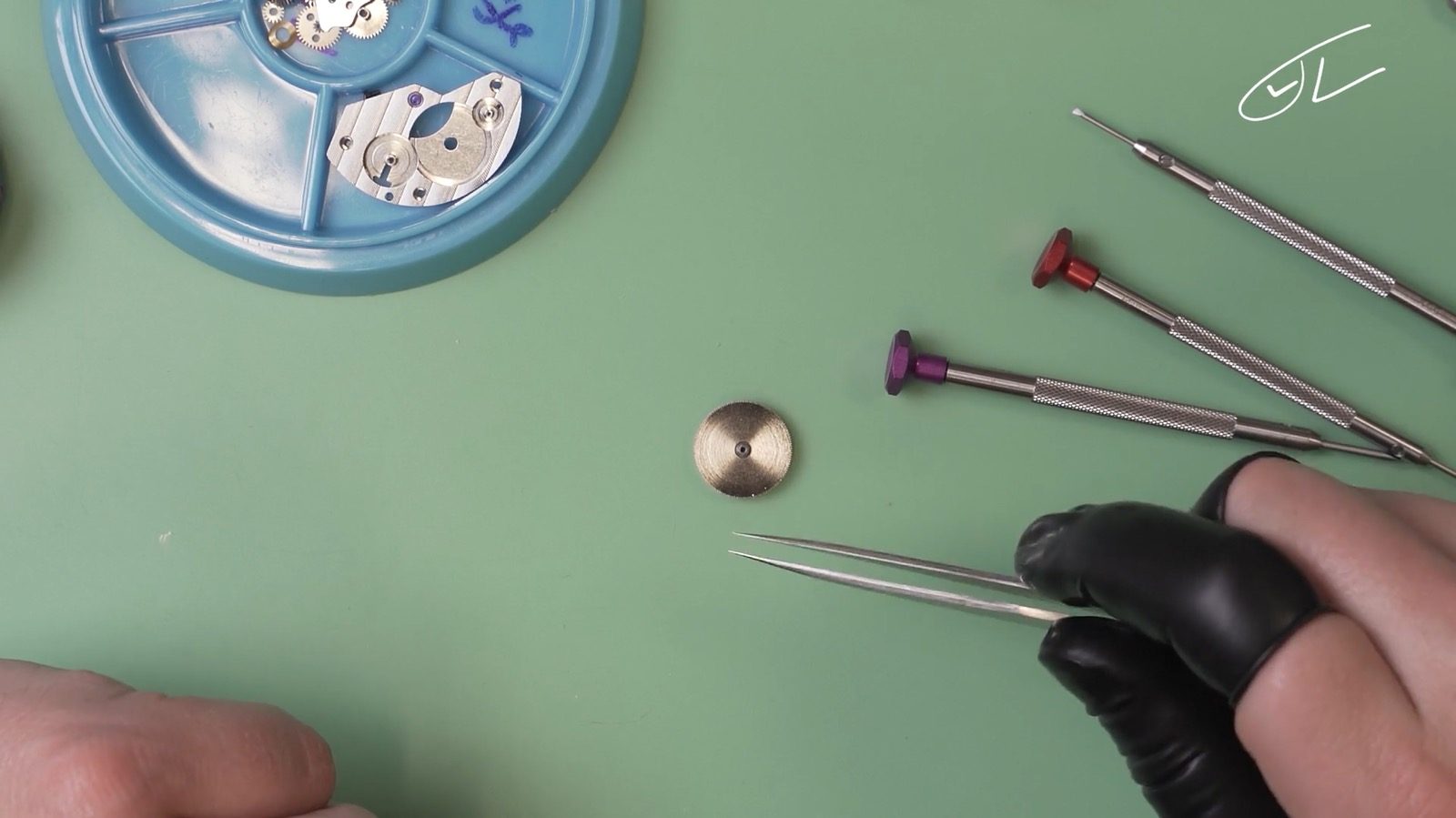
Unlike an ordinary wheel, the barrel turns in two ways: the arbor turns inside the barrel when you wind, and the barrel drum turns around the arbor as the watch runs. So it is oiled at the two pivots and at the two places where arbor and drum turn against each other, on both sides. Then it goes into the plate.
What must you not forget before the barrel bridge?
The setting-lever screw. If it is not in place before the barrel bridge goes on, the whole bridge has to come off again. With it in, the bridge has four guides — its feet, the centre wheel arbor, the barrel arbor and that screw — and goes on far more easily than the train bridge.
How do you oil the winding and setting parts?
- The crown wheel core, on its outer bearing surfaces, then the crown wheel and its screw, which tightens anticlockwise.
- The click's seat, then the click spring, the click and its screw — a tall, fine screw that tips over easily.
- The Breguet teeth between the sliding pinion and the winding pinion, which wear every time the watch is wound.
- The stem: the four faces of its square, its pivot, its bearing and its groove.
- The yoke's pivot and the groove of the sliding pinion it works in, the setting-lever and yoke contact, then the yoke spring, kept under tension with tweezers.
- Almost all of it with Moebius D5, which does about eighty per cent of the oiling on a watch this size. Close the oil pot each time so no dust gets in.
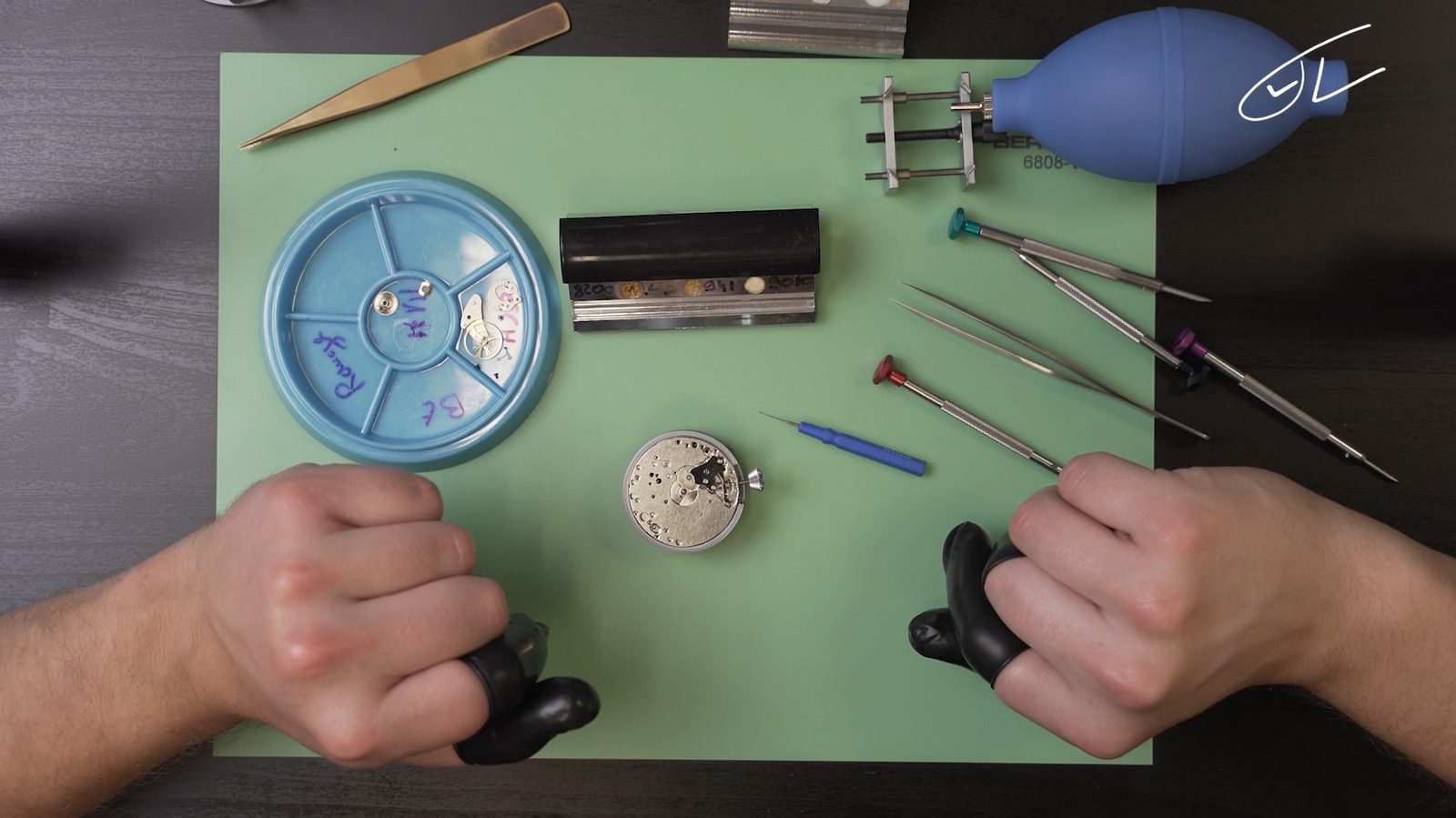
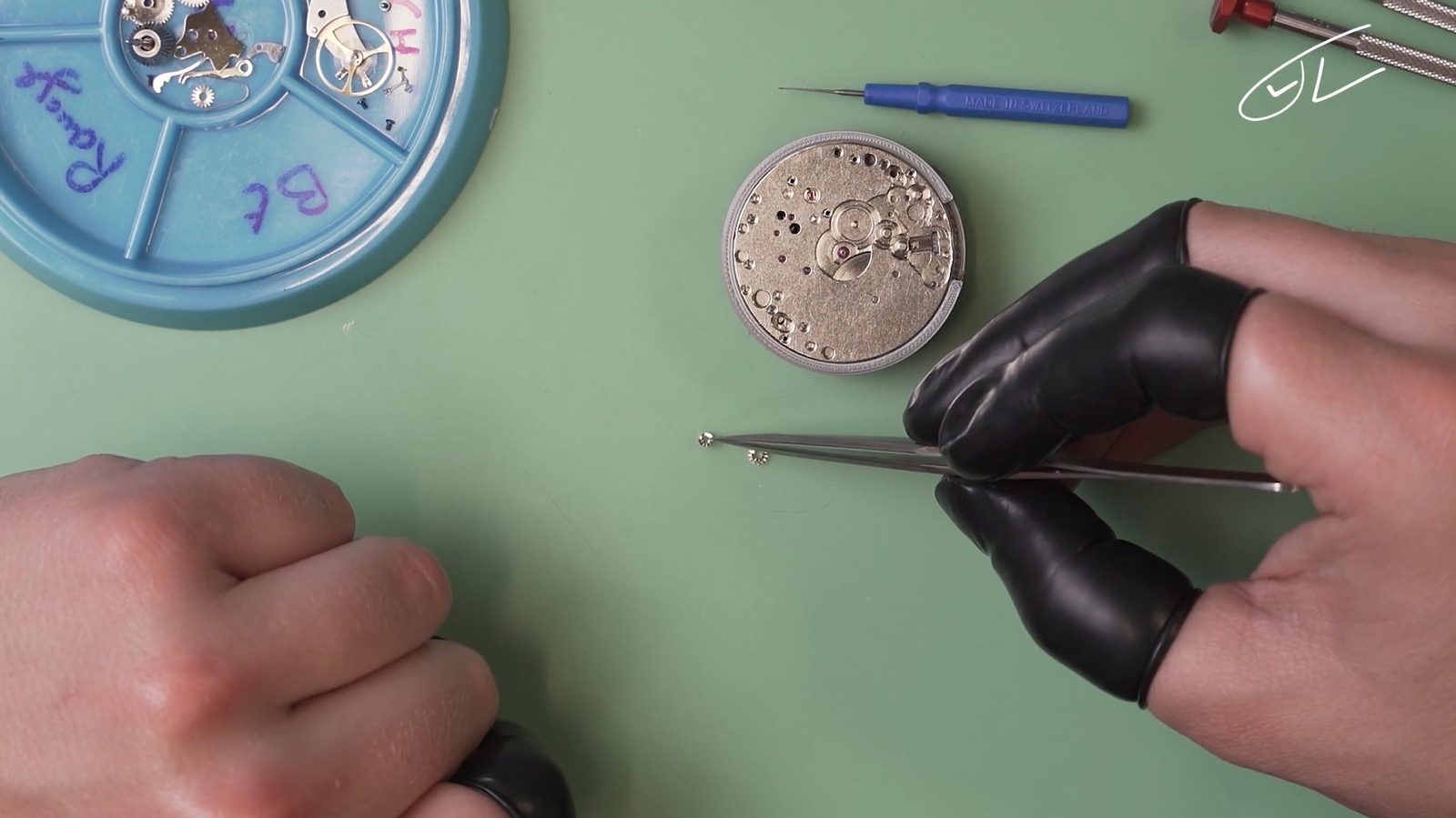
Which oil goes on which wheel?
- Centre wheel and third wheel: D5.
- Fourth wheel, escape wheel and the shock settings: 9010, with the finest oiler.
- The pallet stones: a dedicated lubricant such as Moebius 941 or 9415. The pallet fork's pivots are never oiled.
- The cannon pinion's seat on the centre wheel: its own lubricant, so setting the time slips smoothly and never harms the movement.
- Fill about a third of each oil sink. The oil must never rise above the pivot: too little and the wheel runs dry, too much and it spreads and draws dust.
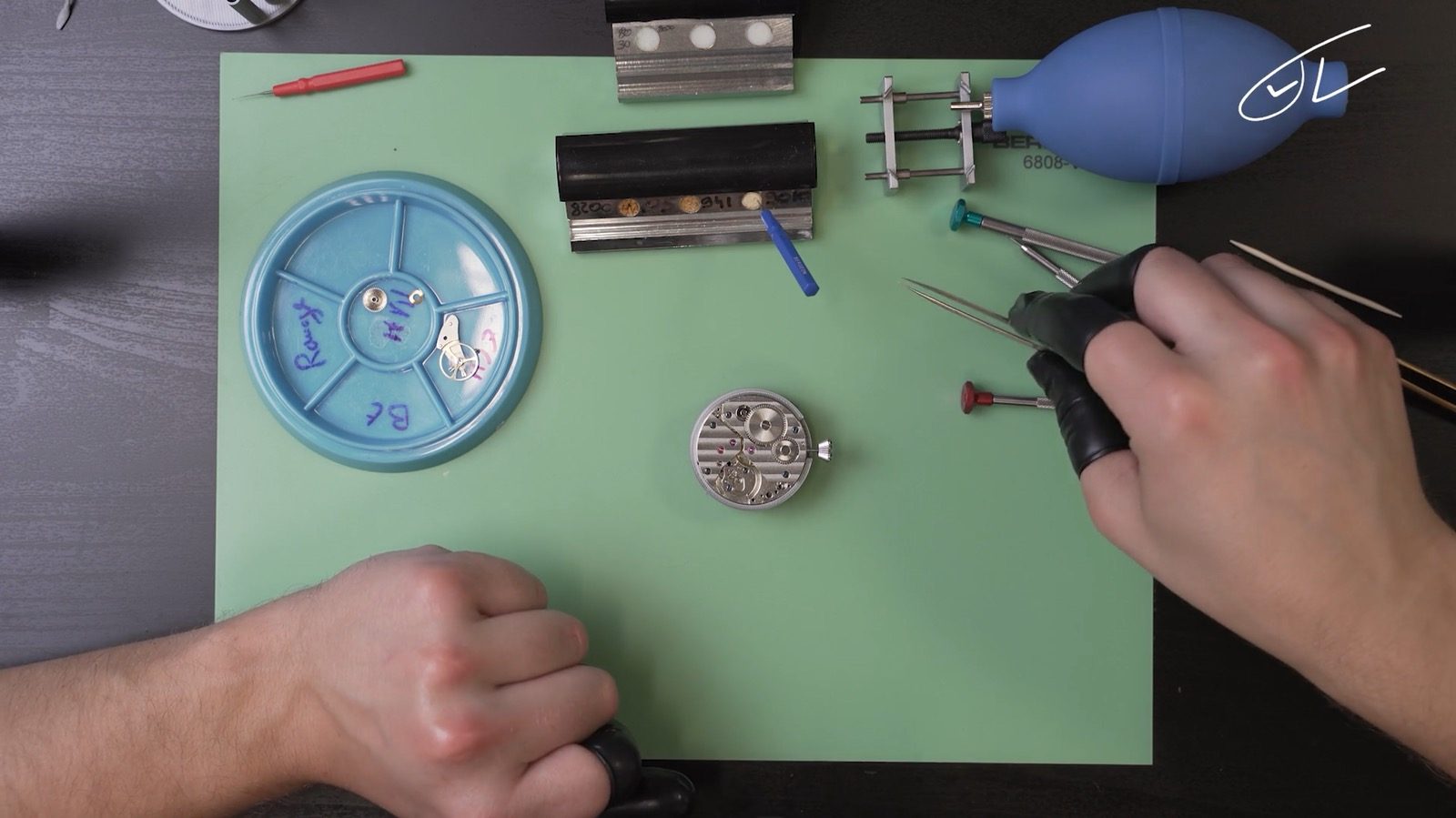
Can you use Rodico to pick up small parts?
You can, but I prefer my fingers in finger cots: Rodico leaves a thin film on the parts. Keep it for lifting a fine part that tweezers cannot catch.
Where can you see it done?
Every step above is filmed at the bench, in close-up, in my online course on the 6497 — with the theory, the tools, the disassembly and the cleaning before it. It is in English and in French, with subtitles in four languages, in your own student space; you ask your questions under the videos and I answer them. 149 €, or three instalments with Klarna, and the first ten minutes of the disassembly are free to watch.
Learn to do it, step by step? The online course, the first 10 minutes free →