
How to service a mechanical watch at home: a beginner's guide to the ETA 6497
Can you service a mechanical watch yourself? A watchmaker explains how a watch works, the tools you need, how to take a 6497 apart, clean it without a machine and oil it.
I'm Tristan Ledard, a watchmaker trained at the École d'Horlogerie de Paris. People often ask me whether they can service a mechanical watch at home, without a school and without a workshop full of machines. They can, if they start on the right movement, with a few good tools, and if they understand what each part does before taking it out. This guide follows the way I teach it in my online course, on the ETA/Unitas 6497.
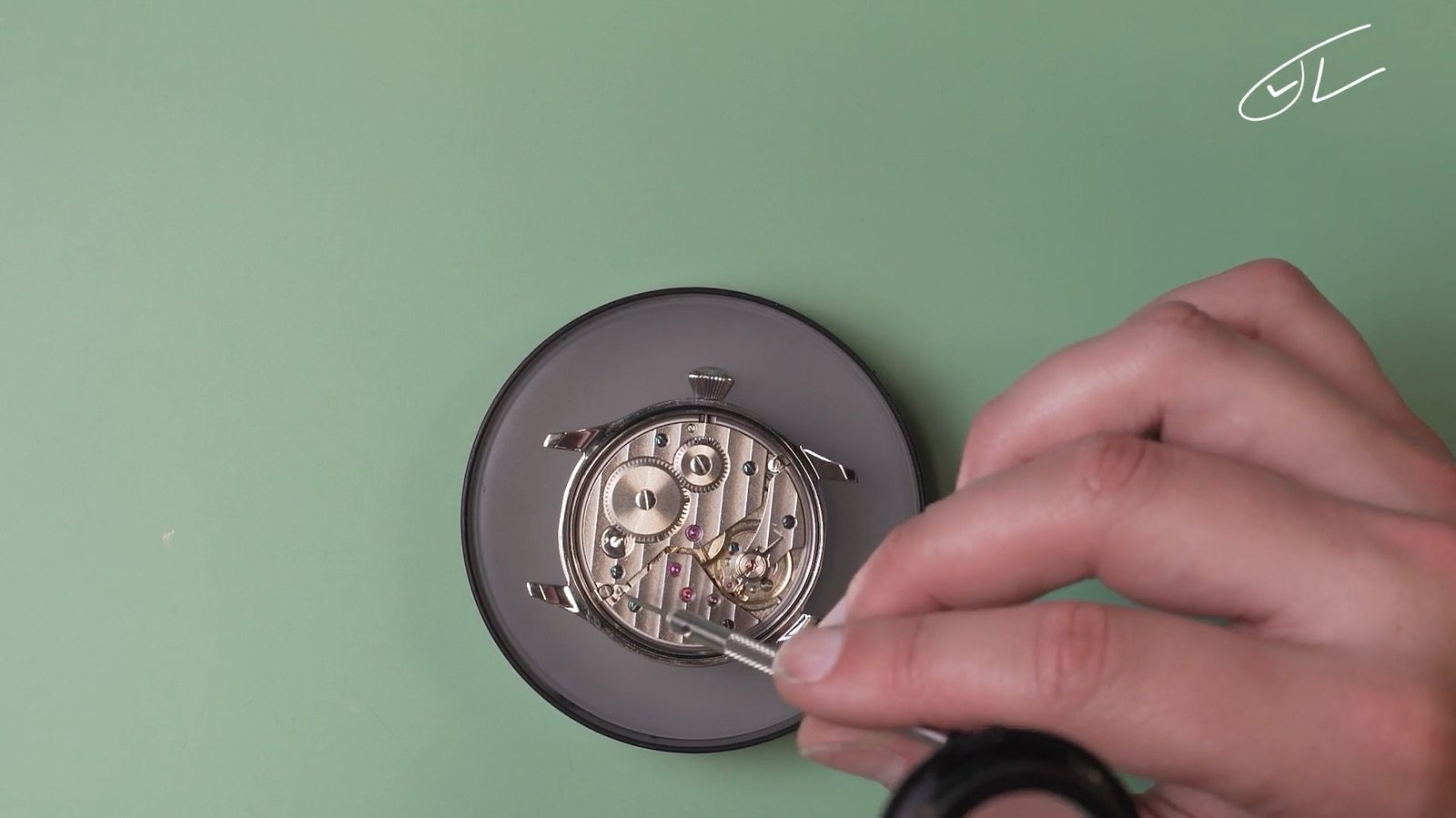
Can you really service a mechanical watch yourself?
Yes. A service means taking the movement apart, cleaning every part, putting it back together and oiling it at the right points. None of it needs a watch-cleaning machine: at school we were taught to clean in a simple glass jar, and that is what I show. What it does need is patience, good light, a few tools that do not mark the parts, and a movement large enough to see what you are doing.
Why learn on the ETA/Unitas 6497?
The 6497 is a hand-wound pocket-watch movement, still made and very common. It is big, so every wheel, screw and jewel is easy to see and to handle, and it is simple: no automatic winding, no date, no complications. Everything you learn on it — the barrel, the gear train, the escapement, the balance, the keyless works — is found in almost every mechanical watch. Its parts are easy to find and not expensive, so a mistake is not a disaster.
How does a mechanical watch work?
- The mainspring, coiled inside the barrel, stores the energy when you wind the watch. A click keeps the ratchet wheel from turning back, so the spring can only let its energy out by turning the barrel.
- The gear train — centre wheel, third wheel, fourth wheel, escape wheel — carries that energy and divides the speed. The centre wheel turns once an hour.
- The escapement shares the energy out in small, regular steps. The escape wheel gives an impulse to the pallet fork, which passes it to the balance through the impulse pin (the "ellipse").
- The balance and its hairspring swing back and forth at a steady rate: that is what keeps time.
- If the balance swings too far, the impulse pin hits the back of the fork horn and the watch "knocks" — a sign of too much amplitude.
- To set the time, the cannon pinion that carries the minute hand slips on the centre wheel's arbor. That friction fit has to be lubricated, otherwise setting the time pushes too hard on the escapement.
- The crown works through the stem and the sliding pinion: pushed in, it winds; pulled out, it sets the time. The ratchet-shaped Breguet teeth are why winding backwards only makes the familiar clicking sound.
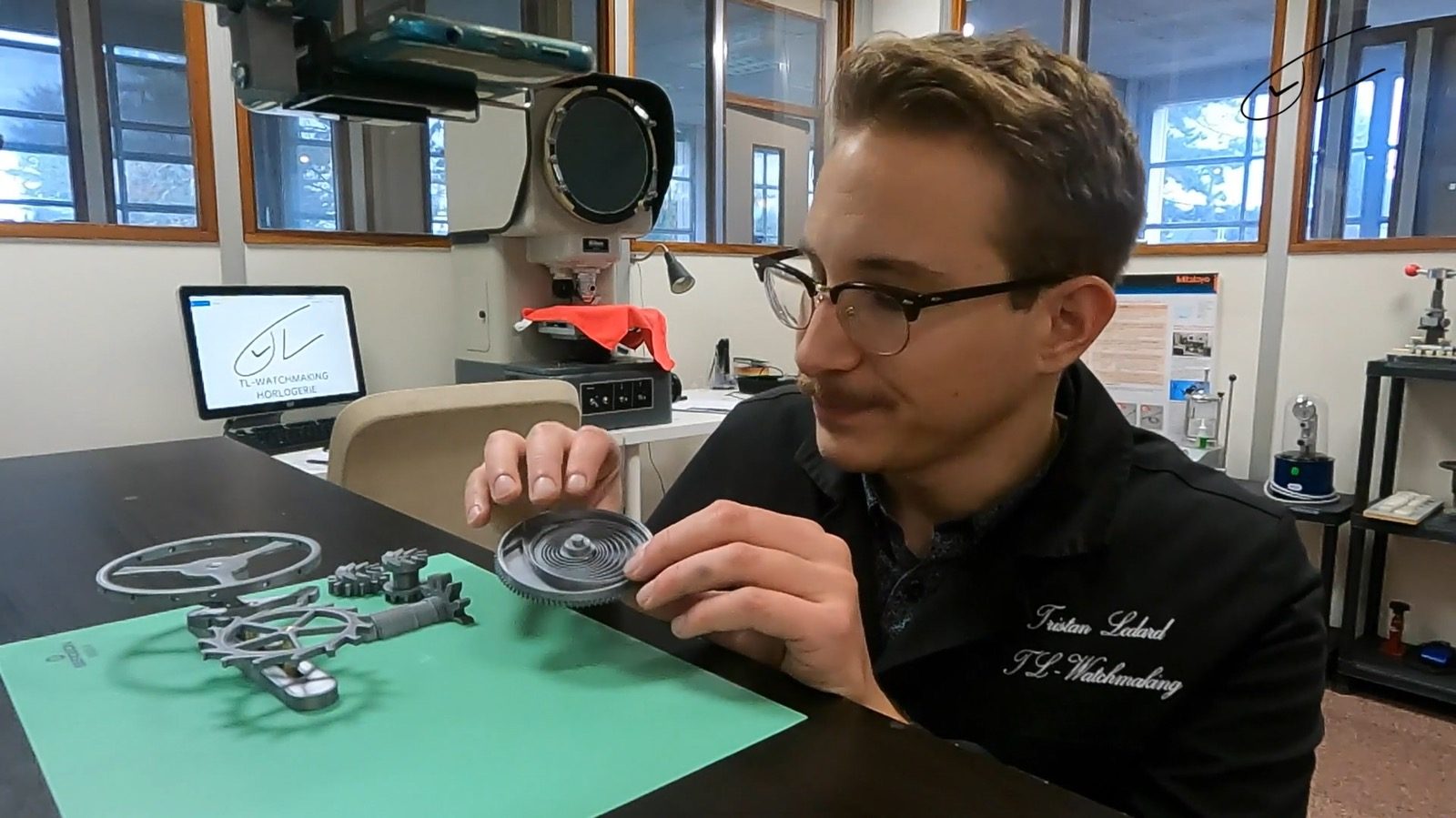
What tools do you need to start?
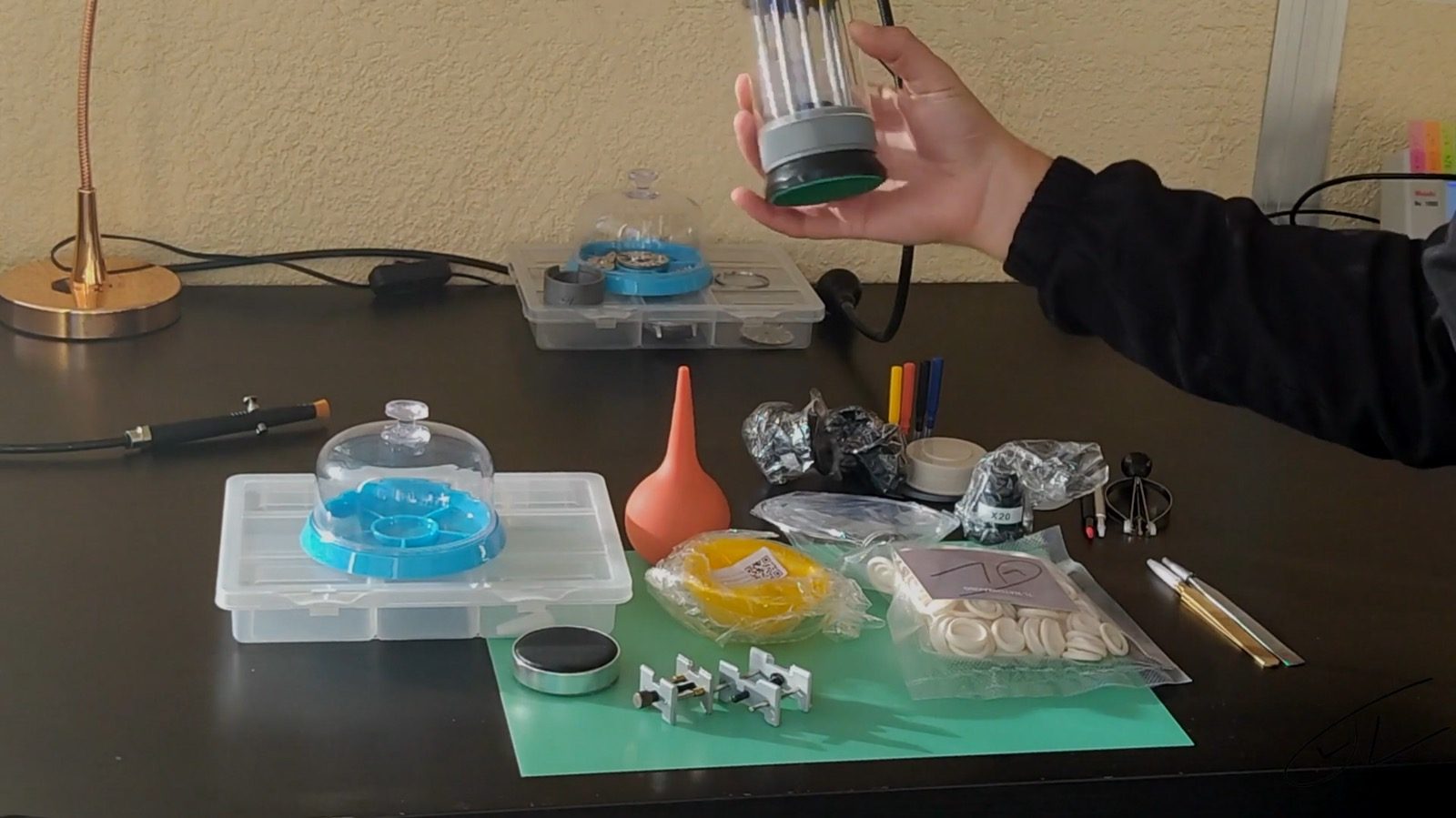
- A dark work coat: a dropped steel part shows up against it.
- Loupes, from ×5 to ×15 or ×20.
- Screwdrivers with well-dressed blades; brass blades do not mark screw heads or bridges if you slip.
- Tweezers, in steel and in brass.
- Movement holders, and a casing cushion to work on the case without scratching it.
- A friction ball to open screwed casebacks.
- A hand lever (presto) and a plastic dial protector to take the hands off safely.
- Finger cots on the thumb, index and middle finger, so you leave no residue or oxidation on the parts.
- Oilers and an oil pot for three lubricants.
- A parts tray with labelled compartments, so screws of different lengths never get swapped.
- A glass jar, a brush, pegwood and an air blower for cleaning.
How do you take a movement apart?
- Remove the strap, protecting the tool with a little tape so the inside of the lugs is not marked.
- Open the caseback with the friction ball.
- Loosen the setting-lever screw a quarter turn at a time until the stem comes free, then tighten it again so the setting lever stays in.
- Turn the case over onto the casing cushion and lift the movement into a holder.
- Let down the mainspring: lift the click off the ratchet wheel and let the crown turn slowly between your fingers. When the balance stops, the barrel is empty and no part can jump out.
- Line up the hands, protect the dial, and lift them with the hand lever.
- Unlock the dial-foot screws and lift the dial off gently.
- Remove the hour wheel and its spring washer, and put everything in its labelled compartment.
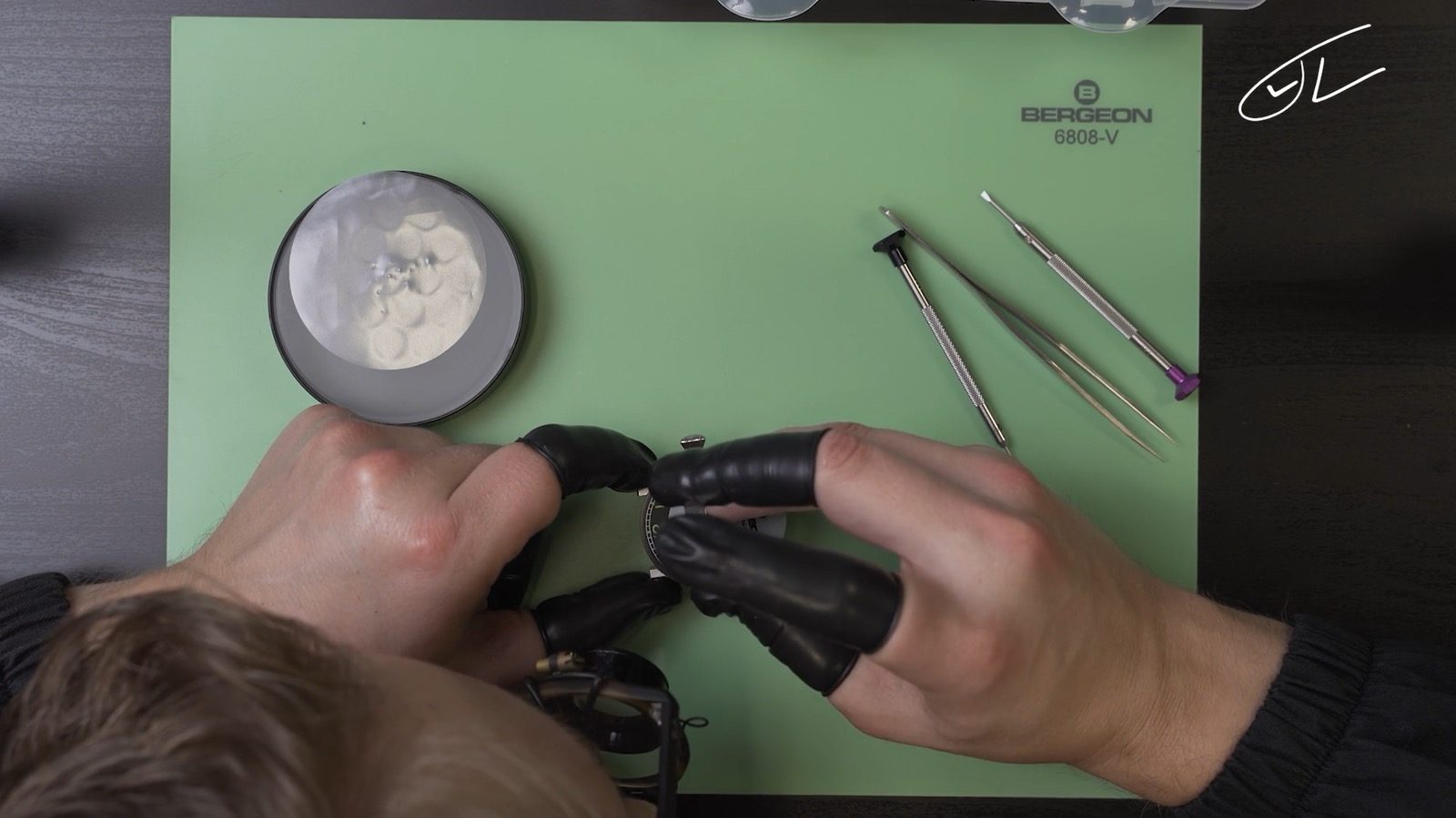
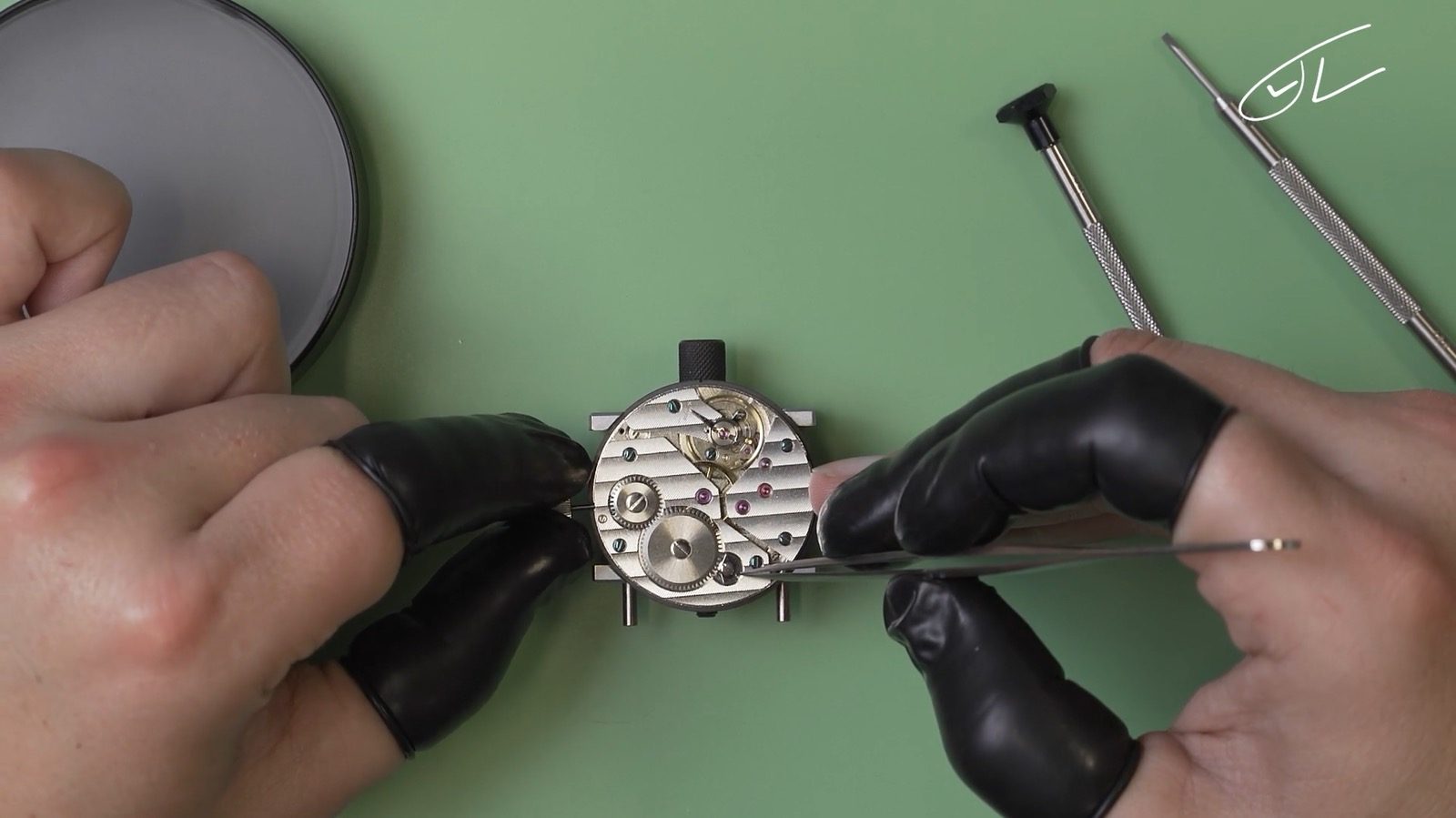
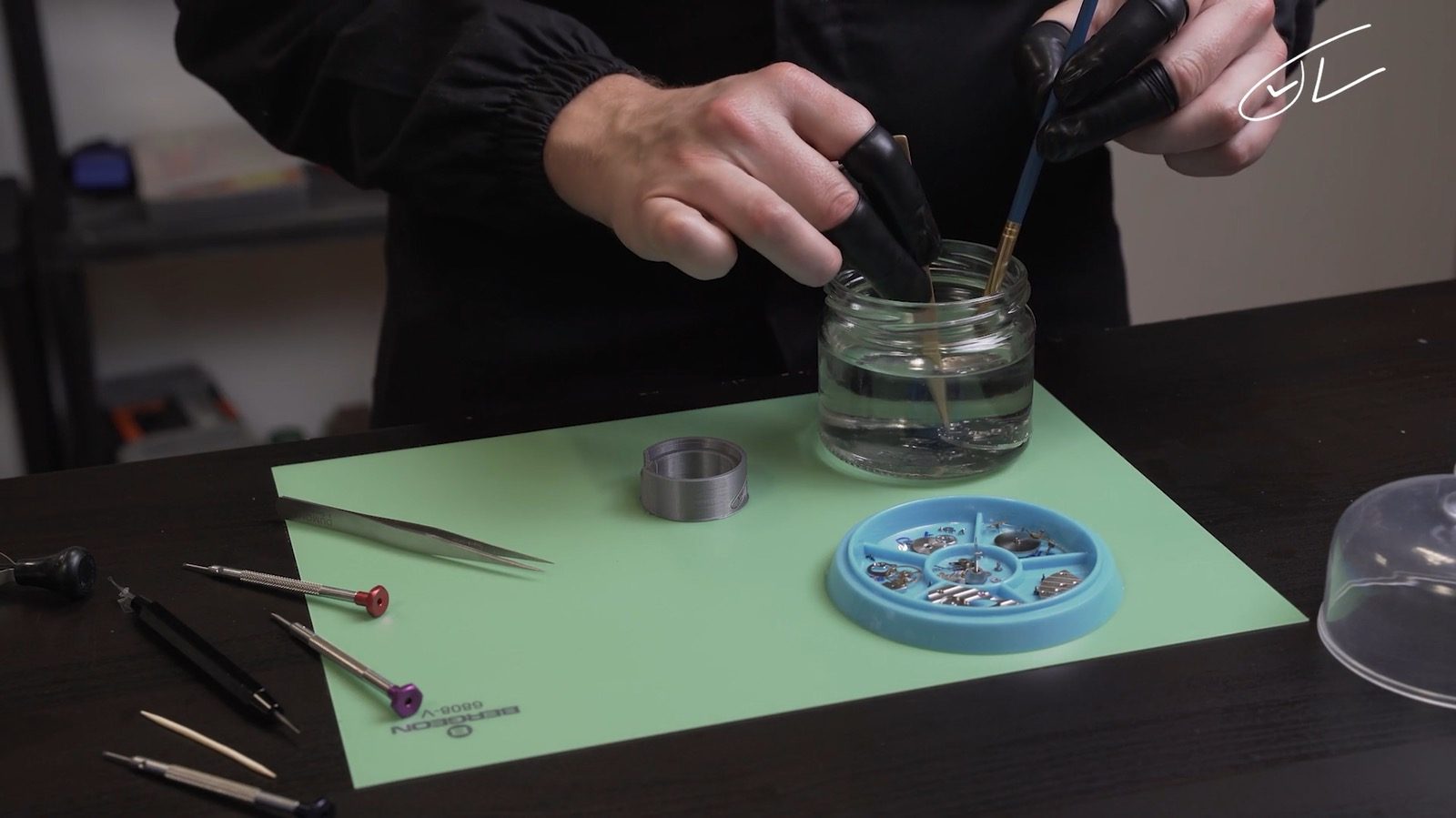
How do you clean a movement without a watch-cleaning machine?
In a glass jar of benzine (cleaning spirit). Brush each part where the old oil has hardened, mostly around the pivots, and clean the jewel holes with a sharpened pegwood stick. Put the parts on paper and blow them dry with the air blower: the benzine evaporates in seconds and leaves nothing behind.
Which oils go where on a 6497?
- Centre wheel and third wheel: Moebius D5.
- Fourth wheel, escape wheel and the shock settings: Moebius 9010.
- Pallet stones: a dedicated pallet lubricant such as Moebius 941 or 9415.
- The cannon pinion's seat on the centre wheel: a lubricant made for that friction fit, so setting the time never harms the movement.
- Fill about a third of each oil sink, never above the pivot: too much oil spreads and attracts dust. The pallet fork's own pivots are never oiled.
Where can you learn it step by step?
My online course films all of this at the bench, in close-up: the tools, the theory with large models, the disassembly, the cleaning, the reassembly and the oiling of a 6497. It is in French and in English, with subtitles in French, English, Dutch and German, in a personal student space you can watch from anywhere. You ask me your questions under the videos and I answer them, and a certificate comes at the end. The course costs 149 €, payable in three instalments with Klarna, and the first ten minutes of the disassembly are free. The movement and the tool kit I use are available separately, and there are courses at my workshop in the Netherlands too.
Learn to do it, step by step? The online course, the first 10 minutes free →