
Watchmaking tools for beginners: what you really need to service a watch
Fewer tools than you think, but good ones: a watchmaker lists the tools to service a first mechanical watch, why each matters, and what to buy.
The first question beginners ask me is what to buy. The honest answer: fewer tools than you think, but good ones. A cheap screwdriver that slips will mark a bridge; a loupe that is too weak will make you guess. Here is what you need to service a first mechanical watch, and why each tool matters.
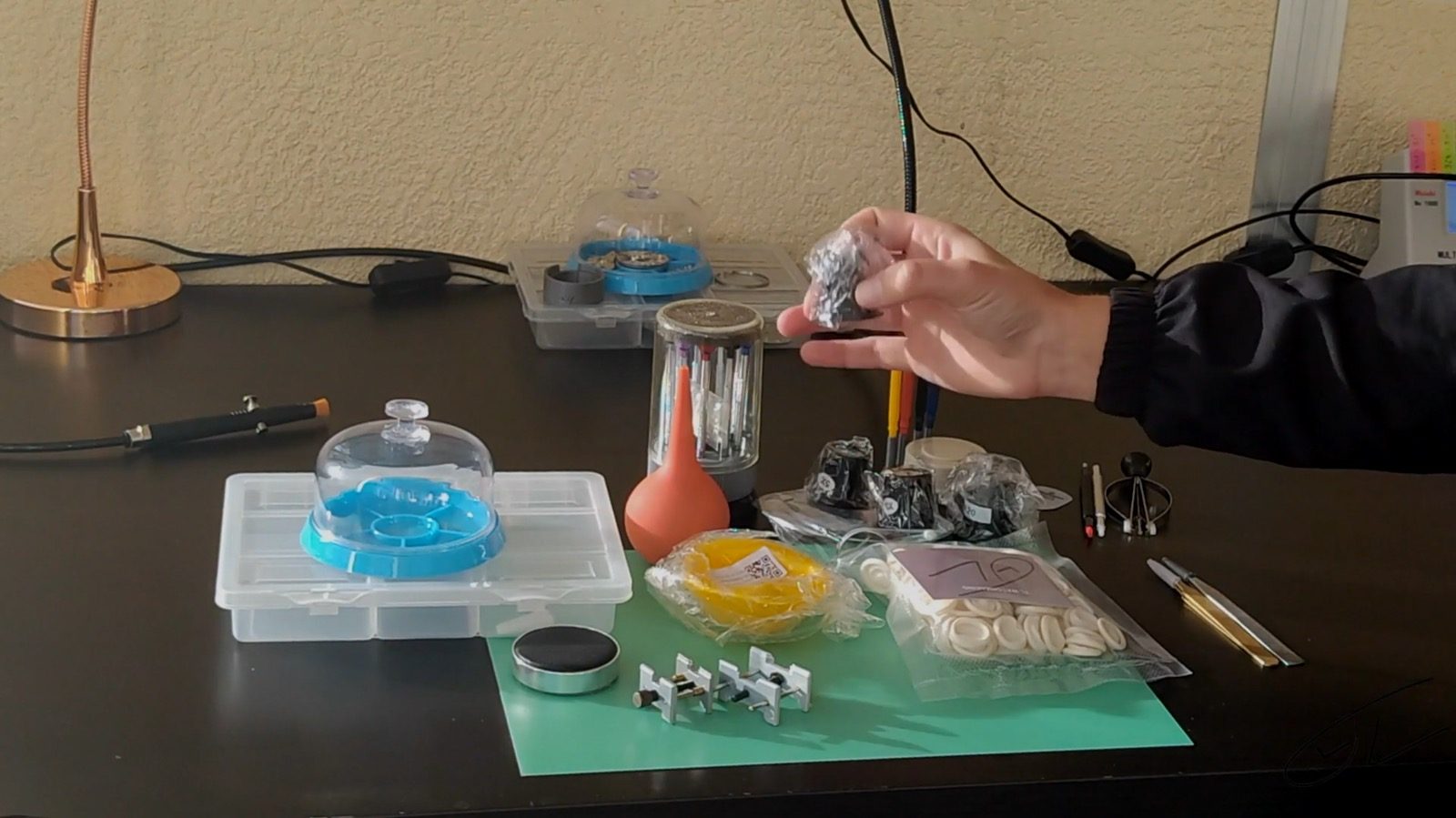
What are the essential watchmaking tools for a beginner?
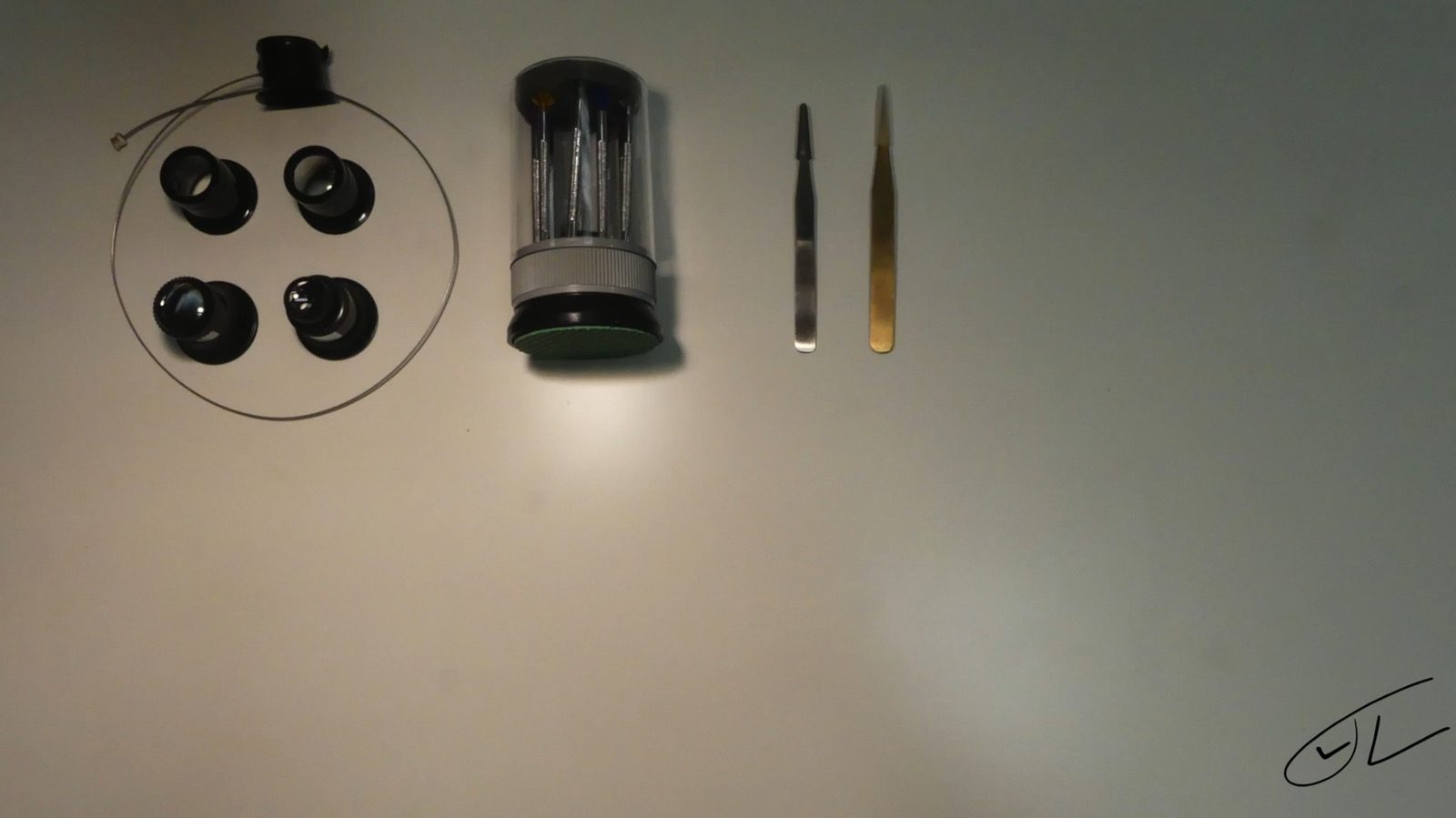
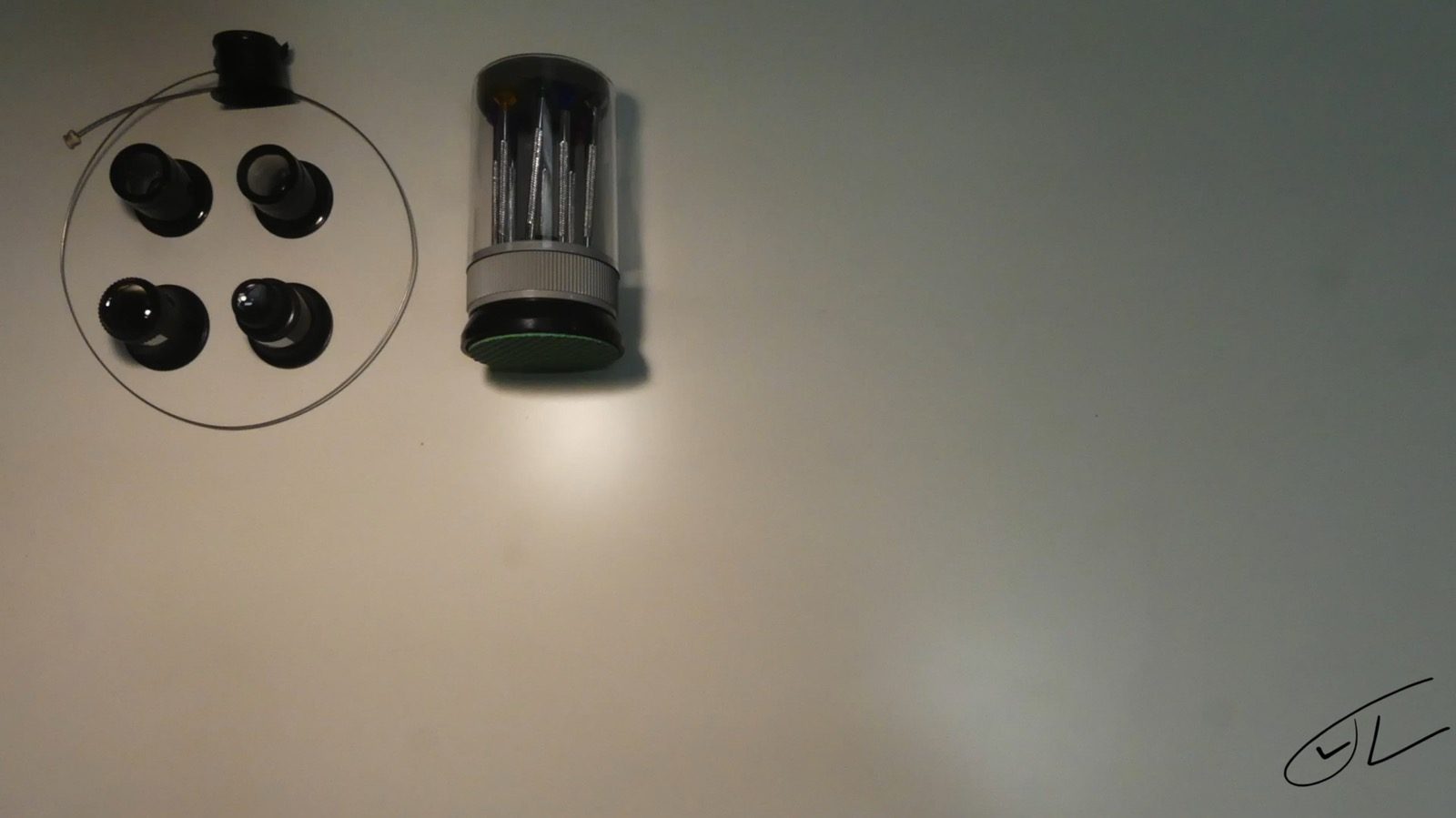
- Screwdrivers with well-dressed blades, in several widths. The blade should be as wide as the screw head. Brass blades do not mark screw heads or bridges if you slip — I made myself a brass set for that reason.
- Tweezers, in steel for most work and in brass for delicate parts, so you do not scratch them.
- Loupes, from ×5 to ×15 or ×20. I clip mine onto my glasses; a headband works too.
- A movement holder that fits your movement. For the 6497 I make a dedicated one: the movement sits steady and you avoid handling mistakes.
- A dust cover to keep parts and movements away from dust between sessions.
What do you need to open a watch and take the hands off?
- A casing cushion in soft leather, so the case does not get scratched while you work on it.
- A friction ball to unscrew casebacks.
- A hand lever (presto), with a plastic dial protector slipped under the hands, to lift them without marking the dial.
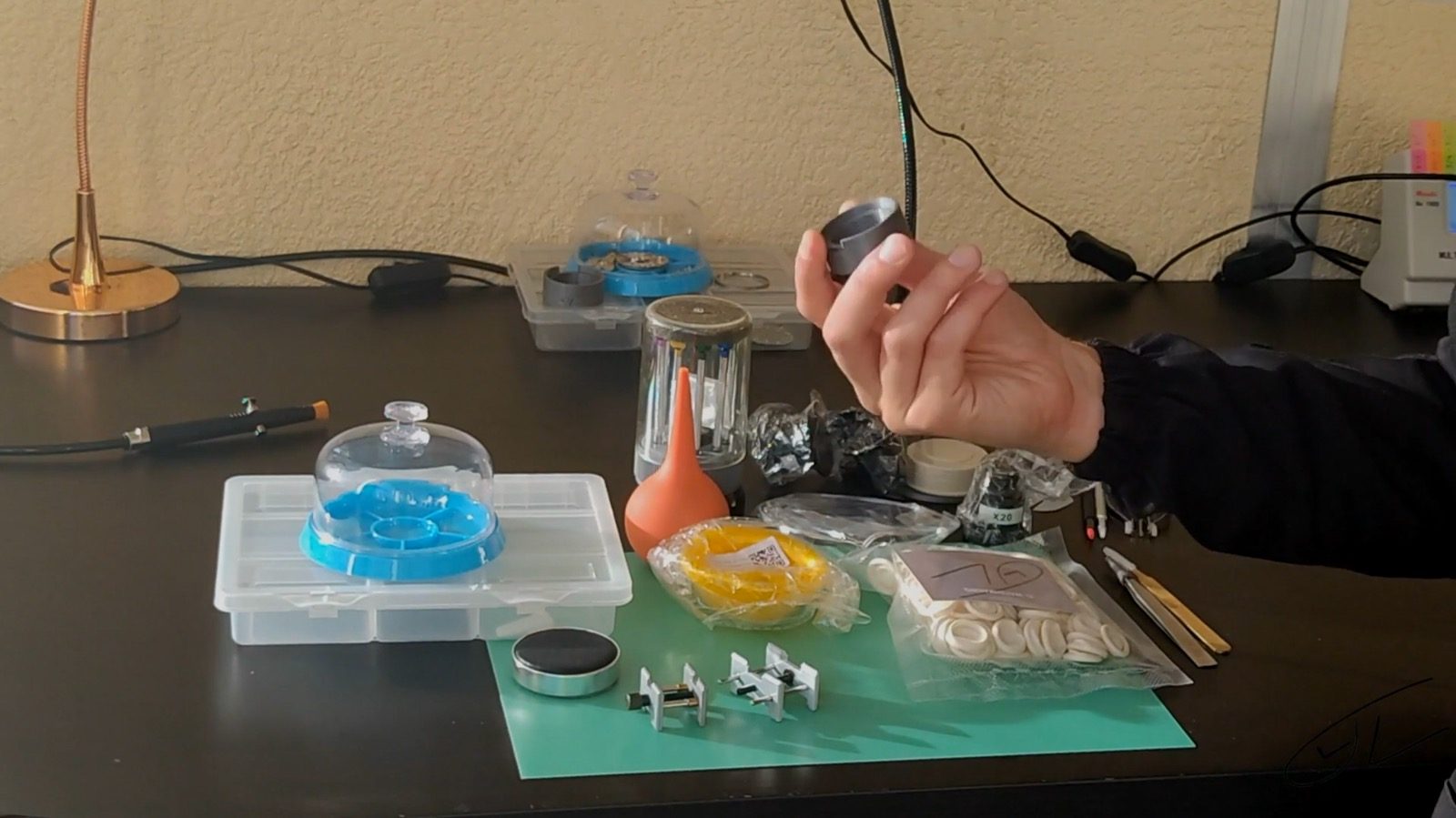
What do you need to clean and oil a movement?
- A glass jar with cleaning spirit (benzine), a brush and pegwood: no watch-cleaning machine needed.
- An air blower, to dry the parts and chase dust and lint.
- Oilers and an oil pot for your lubricants — D5, 9010 and a pallet lubricant on a 6497.
- Finger cots on the thumb, index and middle finger, so your skin leaves no residue or oxidation on the parts.
- A parts tray with labelled compartments, so screws of different lengths are never swapped.
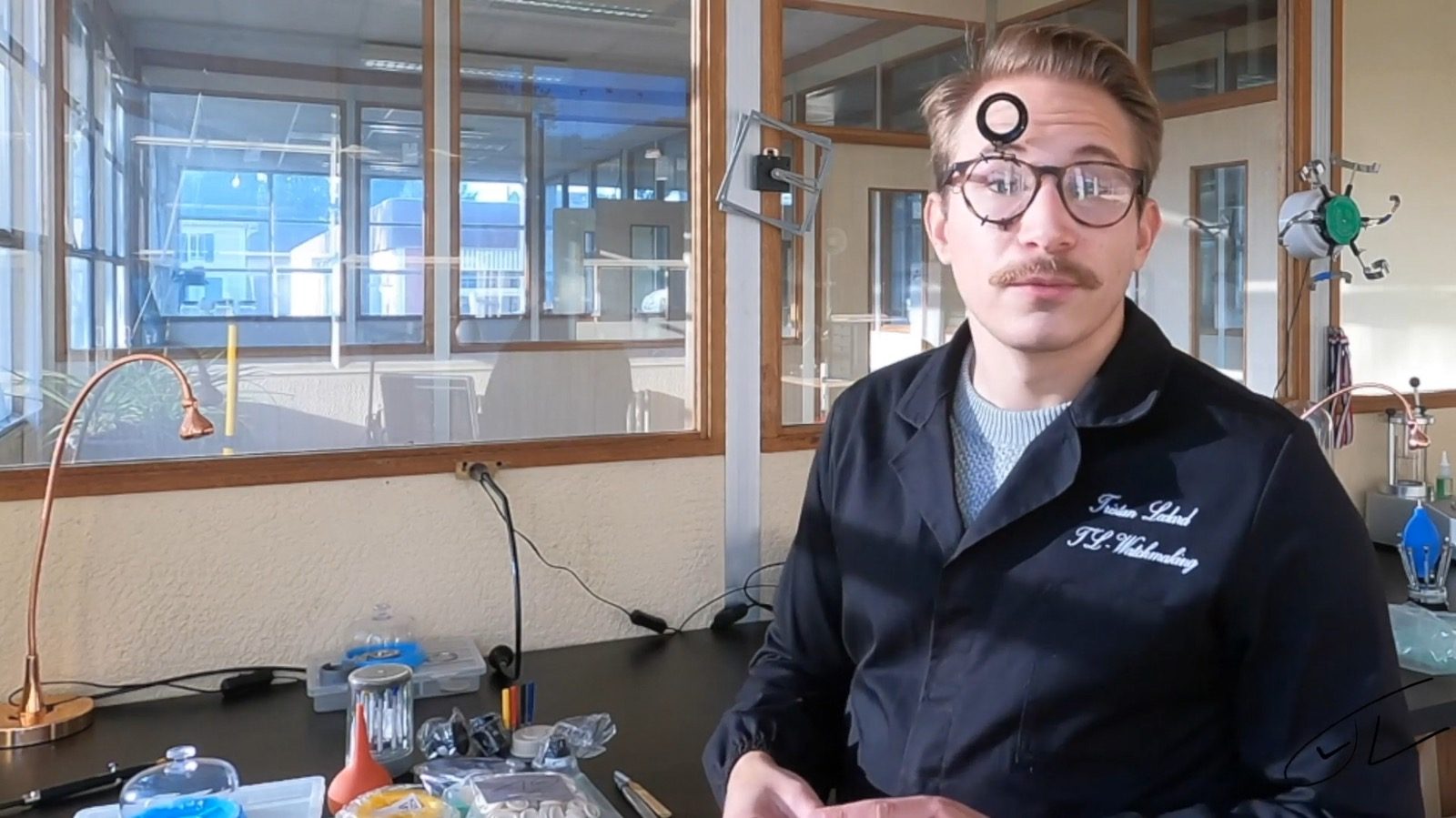
Do you need expensive tools to start?
No. You need tools that are made to last and that do not damage the parts — not the most expensive ones. The screwdrivers in my kits are the ones I use every day at work. What is worth paying for is a good blade, good tweezers and enough magnification; the rest can be simple.
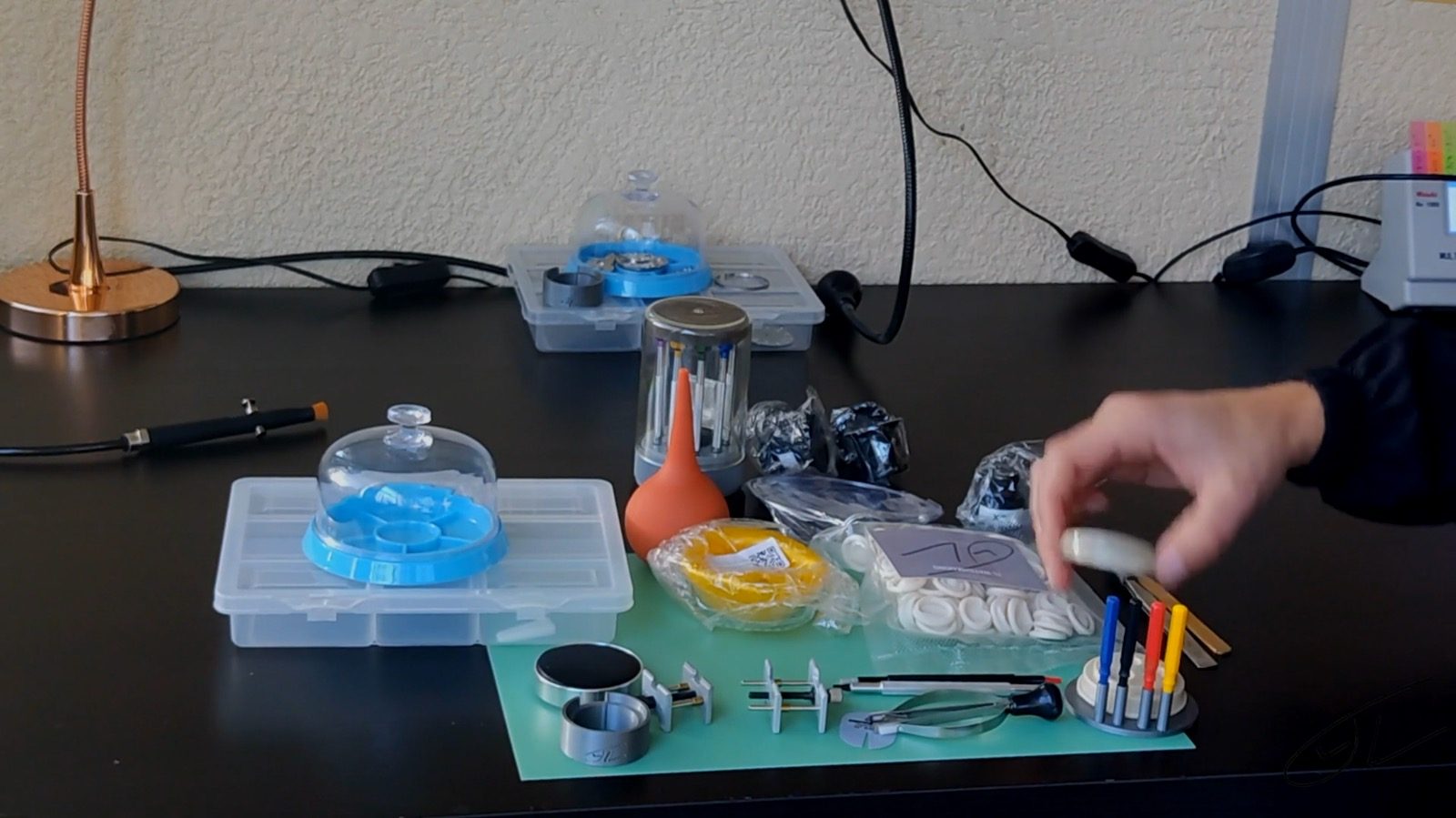
Which tool kit should you choose?
I put three kits together, each tool chosen for the balance of quality and price:
- Essential movement kit, 99 €: screwdrivers, tweezers, loupes, the 6497 movement holder, the hand lever and a dust cover — enough to take a movement apart and put it back together.
- Classic kit, 189 €: everything above, plus the friction ball, a second movement holder, the casing cushion, the air blower, oilers, the dial protector and finger cots — to work on a whole watch.
- Oil and cleaning kit, 279 €: the classic kit with the oil, the cleaning jar, Rodico and a parts box — everything to carry out a full service.
The kits ship to Europe and Canada. The 6497 movement is available on its own for 99 €.
Where do you learn to use them?
In my online course every tool is introduced at the bench before it is used, then used on a real 6497 through the theory, the disassembly, the cleaning, the reassembly and the oiling. It is in English and in French, with subtitles in four languages; you can watch it from anywhere and ask me your questions under the videos. 149 €, or three instalments with Klarna, and the first ten minutes of the disassembly are free.
Learn to do it, step by step? The online course, the first 10 minutes free →